Removing fitness equipment might seem straightforward at first glance, but it often turns into a surprisingly complex task. Whether you’re clearing out your home gym, relocating commercial fitness machines, or upgrading to newer models, the process involves more than just physical effort.
Treadmills, rowing machines, multi-station gyms, and free weights are bulky, often powered, and sometimes dangerously heavy. Without proper planning, you risk damaging your property, or worse, injuring yourself.
In the UK, you also need to consider legal and environmentally responsible disposal routes for certain types of equipment, particularly those containing electrical components or metal frames.
From planning access routes to deciding whether to DIY or call in a professional service, there’s a lot to factor in. This comprehensive guide breaks down fitness equipment removal into practical, step-by-step stages, helping you stay safe, reduce stress, and make informed decisions every step of the way.
What Should You Do Before Starting Fitness Equipment Removal?
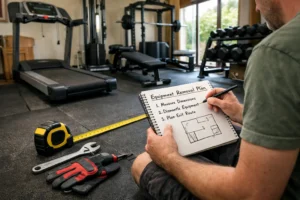
Before jumping into dismantling or lifting anything, proper planning is crucial. Start with a full assessment of the room or area where your fitness equipment is located. This means measuring doors, staircases, and hallways to ensure your gear will actually fit through.
It’s incredibly common to realise too late that a treadmill or weight bench is wider than a doorframe. If needed, remove doors from hinges or plan an alternate route through a garage or garden exit.
Next, review each piece of equipment. Ask yourself what’s worth keeping, donating, reselling, or recycling. If you haven’t used something in years, this could be a great time to declutter. Note down any items that are powered or contain electronic components, as these require extra care during disassembly and transport.
Lastly, prepare the environment. Lay down protective coverings on floors, especially in hallways or around doorframes. Inform others in your household or building to avoid using narrow pathways during the removal. A well-prepped space will make the job safer and far more efficient.
What Tools and Safety Gear Are Needed for Safe Removal?
Fitness equipment removal can lead to injuries or damage without the proper tools and safety equipment. Beyond basic tools like screwdrivers and Allen keys, you’ll need specialist gear to support the weight and shape of heavy machines. Remember, a treadmill might weigh over 100 kg and an elliptical could be even bulkier to handle.
Protective gloves are essential for improving grip, while padded materials prevent damage to walls and floors. Using sliders or dollies helps prevent muscle strain and allows equipment to be moved smoothly over different surfaces. Back braces or lifting belts are helpful for those with lower back concerns.
Here’s a practical table to guide you:
| Tool or Gear | Purpose During Removal |
| Allen keys and spanners | For dismantling frames, bolts, and attachments |
| Moving blankets or foam | Wrap around machines to avoid surface damage |
| Work gloves | Improve grip and protect against rough surfaces |
| Furniture sliders | Allow smoother motion across flooring |
| Hand truck/dolly | Transport heavier items safely and efficiently |
| Zip-lock bags and labels | Keep screws and fixings sorted and matched |
Having this equipment ready before starting will prevent interruptions and make the entire process much more manageable.
How Do You Safely Disconnect Electronics and Consoles?
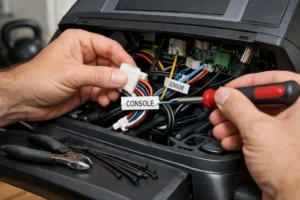
When handling powered gym machines, disconnecting them correctly is critical. Treadmills, ellipticals, and smart bikes often include sensitive screens, circuit boards, and power units. Failing to disconnect these safely can cause lasting damage or pose a safety risk during removal.
Begin by switching off the power from the wall socket. Wait a few minutes to ensure no residual electricity is present. Unplug the machine and carefully gather the cord, securing it with a tie or wrapping it gently to prevent tangling.
Here are steps to follow:
- Disconnect all machines from mains power before touching any wiring
- Remove batteries from any consoles or remotes
- Take photos of cables and connections to make future setup easier
- Wrap consoles, screens, and control panels in soft material
- Label each wire and store them in marked bags
If your equipment includes a touchscreen or smart console, never use liquids directly on it. Clean with an electronics-safe cloth before packing.
What Is the Correct Step by Step Fitness Equipment Removal Order?
The success of your removal depends heavily on the sequence of actions. Jumping in without a structured approach may lead to mistakes that damage your gear or your home. Follow this order to keep things controlled and safe.
Power Down and Unplug All Machines
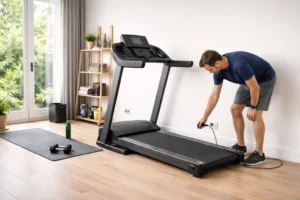
Always start by powering off equipment at the mains. Remove any batteries, safety keys, or wireless devices and allow machines to cool down if recently used.
Remove Any Attachments
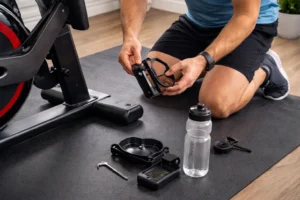
Clear any loose or attached items such as cup holders, magazine racks, trays, bands, or mats. These are easier to wrap and pack separately, which also reduces the size of the main machine.
Dismantle Large Components
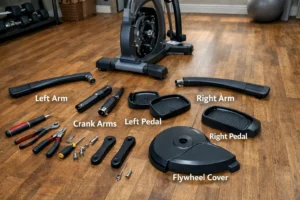
Detach pedals, handlebars, arm supports, weight stacks, and consoles. These parts are typically bulky or protrude, making the overall equipment harder to navigate through tight spaces.
Disassemble the Main Frame
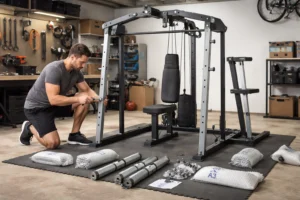
Where possible, split the equipment into its main components. Most treadmills can be folded or unhinged into two sections. Refer to your manufacturer’s guide if available, or look up a PDF version online.
Move Heavy Base Units Last
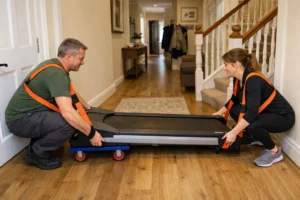
Use dollies or sliders for this step, especially on wooden or tiled floors. Never drag equipment directly as it can leave scratches or damage the flooring. Heavy bases often need a second person for balance and lifting support.
Wrap and Label All Parts
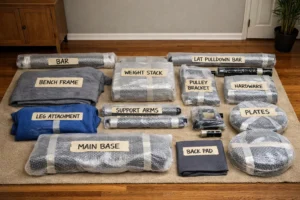
Use bubble wrap or moving blankets on metal parts to prevent scratches. Use masking tape and a marker to label each part or its destination (e.g. “Elliptical – Base”).
Track Screws and Bolts Carefully
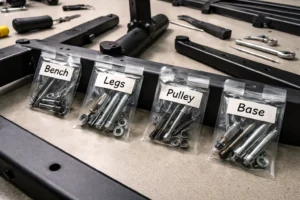
Each machine has specific fixings. Store them in zip bags with clear labels, and tape these to the related frame parts. If you disassemble multiple items, keeping parts sorted becomes essential for hassle-free reassembly.
By the end of this process, you’ll have your equipment broken down, protected, and organised for safe transport or disposal.
Is There a Fitness Equipment Removal Checklist I Can Follow?
Yes, and having a checklist is essential. It ensures you follow a structured plan and reduces the chance of errors that cause delays or damage. This isn’t just a ‘tick the box’ task, it’s a visual workflow to keep your process efficient.
Start by assessing your space and item condition. Then prepare all necessary tools and safety gear. As each stage is completed, refer back to ensure nothing is skipped.
Here’s a unique fitness equipment removal checklist:
| Checklist Stage | What to Do |
| Space Planning | Measure all doors, halls, and lifts |
| Equipment Review | Decide to keep, donate, or dispose of each item |
| Safety Prep | Gather gloves, sliders, and floor protectors |
| Electrical Disconnect | Unplug machines, remove batteries, label wires |
| Dismantling | Follow manual or take photos for each step |
| Sorting | Label parts, bag hardware, wrap delicate pieces |
| Disposal Arranged | Book council collection or waste carrier if needed |
| Final Check | Inspect space, floors, and walls before leaving |
Follow this, and you’ll stay organised while avoiding common pitfalls.
What Are Your Options for Fitness Equipment Disposal in the UK?
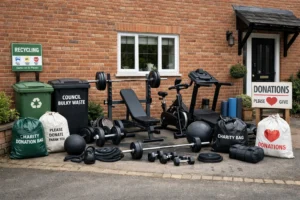
Disposal routes in the UK vary based on the condition and type of equipment. The goal should always be to minimise landfill waste and follow proper regulations. The simplest route for domestic users is often council bulky waste collection, although this can be slow and limited to certain item types.
Recycling centres may accept metal-framed or electric machines, especially those marked WEEE (Waste Electrical and Electronic Equipment). Alternatively, you can contact licensed waste carriers to pick up directly from your property, which is ideal for larger clear-outs.
Other options include:
- Donating to schools, gyms, or local charities
- Selling usable gear on Gumtree or Facebook Marketplace
- Arranging community swaps through Freecycle or local groups
- Using a skip hire service for full clear-outs
Just ensure your disposal method complies with UK waste handling rules to avoid fines or fly-tipping issues.
When Should You Hire a Professional Fitness Equipment Removal Service?
While many people can remove small fitness items on their own, professional help becomes essential in more demanding situations. If your gym equipment is commercial-grade, overly heavy, or positioned upstairs, trying to remove it yourself could risk injury or damage to your home.
Professionals are trained to dismantle complex machinery and have access to tools like stair climber dollies, reinforced straps, and lifting harnesses. They’re also insured, so if something does go wrong, you’re not left with the bill.
You should strongly consider hiring experts if:
- Equipment exceeds 100 kg
- Access is tight or involves stairs
- Disposal or recycling is included in the service
- You’re dealing with a multi-machine commercial setup
In these scenarios, paying for removal services is often more cost-effective than the risks of DIY.
What Common Mistakes Should You Avoid During Fitness Equipment Removal?
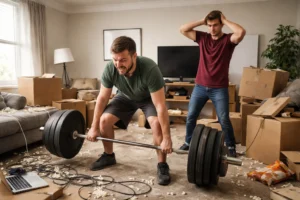
Mistakes during removal usually stem from underestimating either the size of the equipment or the logistics involved. One of the biggest errors is attempting to carry heavy items alone. This can result in injuries or costly property damage.
Other mistakes to avoid include:
- Overpacking boxes with too many weights
- Not labelling hardware or disassembled parts
- Skipping access measurements before starting
- Cleaning screens with the wrong products
- Dragging machines across unprotected floors
- Losing essential bolts or safety pins
- Reassembling machines without checking safety features
By avoiding these errors, you make the process smoother and protect both your equipment and your home.
What Should You Do After Fitness Equipment Has Been Removed?
Once the equipment is out, don’t forget to address the space it leaves behind. Large machines often sit in one place for years, so the floor underneath might be dented, dusty, or discoloured. Start by cleaning thoroughly, then check for any signs of damage.
If you’re planning to reuse the space, make it safe first. Fill any screw holes, repair minor floor scuffs, and ventilate the room. This is your chance to reset the space before a new use.
Key post-removal steps include:
- Cleaning the floor and skirting boards
- Repairing dents or scrapes
- Checking plug sockets and light fittings
- Planning future layout or upgrades
A tidy space after removal leaves you with more than just room, it gives you possibilities.
How Long Does Fitness Equipment Removal Take and What Will It Cost in the UK?
The time and cost of fitness equipment removal vary depending on several key factors: the number of machines, their size and weight, access restrictions, and whether disposal is involved.
On average, a single treadmill might take under an hour, while dismantling and removing a multi-gym setup could take several hours or more. In terms of costs, local UK services typically charge based on complexity and travel. Most will offer quotes based on your specific setup.
Average Time and Cost Table:
| Equipment Type | Estimated Time | Typical UK Cost |
| Single Treadmill | 30–60 minutes | £25–£75 |
| 2–3 Home Items | 2–3 hours | £70–£250 |
| Medium Home Gym | Half day | £250–£500 |
| Commercial or Full Clear-Out | Full day+ | £600–£2,500 |
Always get multiple quotes and confirm what’s included—disassembly, transport, disposal, or storage.
Can You Reuse, Sell or Donate Old Fitness Equipment in the UK?
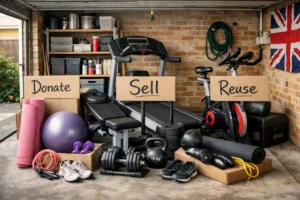
Absolutely, and in many cases, it’s the most sustainable option. If your equipment still works but no longer fits your space or lifestyle, consider reuse, resale, or donation before resorting to disposal.
Options include:
- Listing on resale platforms like Facebook Marketplace, Preloved, or eBay
- Donating to schools, youth clubs, or local sports charities
- Giving away through Freecycle or community Facebook groups
- Repurposing parts (e.g., using weight plates for DIY projects)
- Recycling through registered WEEE disposal points
Reducing waste not only helps the environment but can also support others looking to improve their fitness affordably.
Conclusion
Handling fitness equipment removal in the UK doesn’t have to be an overwhelming task. With the right preparation, tools, and a step-by-step approach, you can safely remove everything from treadmills to weight benches without damaging your home or injuring yourself.
From understanding dismantling procedures to finding responsible disposal options, each stage plays a vital role in ensuring a smooth transition.
If you’re unsure about tackling it all alone or need help disposing of old or broken gym gear, our rubbish removal services are here to help. We offer safe, efficient, and eco-friendly solutions across the UK for both domestic and commercial properties, making your gym equipment removal one less thing to worry about.
FAQs
Can I move gym equipment by myself without any help?
You can move smaller items like dumbbells and yoga mats on your own, but larger machines should always involve at least one other person. Moving alone increases the risk of injury and property damage, especially with bulky or powered equipment.
Do I need to disassemble all fitness equipment before removal?
Not all equipment needs to be fully dismantled, but disassembling larger components makes transport much safer and easier. Treadmills, ellipticals, and multi gyms often require partial disassembly to fit through doors or stairways.
How should I prepare the room before removing gym equipment?
Clear a pathway, measure door frames, and protect flooring with blankets or cardboard. This prevents accidents and makes manoeuvring heavy machines smoother.
What should I do with old or broken gym equipment?
If it still functions, consider selling or donating it to a local club or charity. For broken or outdated gear, use a licensed waste carrier or your local recycling centre.
Are there UK laws about disposing of fitness machines?
Yes, powered gym equipment often falls under WEEE (Waste Electrical and Electronic Equipment) regulations. You must dispose of them via authorised routes such as recycling centres or registered waste carriers.
How much does professional gym equipment removal typically cost?
Costs vary depending on the number and size of machines, but local removals often start at £70. Complex removals with dismantling or disposal can reach £500 or more.
Is it worth hiring a fitness equipment removal service?
Yes, especially if your equipment is large, powered, or located in a difficult space like an upstairs room. Professionals ensure safe removal, prevent damage, and often include disposal or recycling services.