
From my experience, the safest way is to identify what’s hazardous, store it properly, and use the right disposal route whether that’s a local council service, a recycling centre, or calling in licensed professionals like us at Rubbish Experts.
In this guide, I’ll walk you through:
- How to recognise hazardous waste at home or work
- Why proper disposal really matters for health and the environment
- The most common types of hazardous waste I see across the UK
- What UK law says about handling it
- How to manage it safely at home or on-site
- When to bring in a professional team for help
Let’s break it all down.
What Is Considered Hazardous Waste in the UK?
Hazardous waste is any waste material that poses a real or potential threat to human health, property, or the environment.
In the UK, hazardous waste is clearly defined and regulated by the Environment Agency to ensure it is handled responsibly from the moment it is produced until its final disposal.
In my experience, many people underestimate how much hazardous waste they generate simply because it comes from everyday activities.
At its core, hazardous waste is identified by the properties it contains. These properties determine how dangerous the waste is and how it must be stored, transported, and disposed of. Waste is considered hazardous if it is:
- Toxic and capable of causing harm if inhaled, ingested, or absorbed through the skin
- Corrosive and able to damage materials or living tissue
- Flammable and capable of igniting easily
- Reactive and prone to chemical reactions that may cause explosions or release harmful gases
- Harmful to wildlife or capable of contaminating water supplies
The presence of even one of these characteristics is enough for waste to fall under hazardous waste regulations.
Common Sources of Hazardous Waste
Hazardous waste is not limited to industrial environments. I regularly see hazardous materials generated in homes, offices, retail spaces, and construction sites.
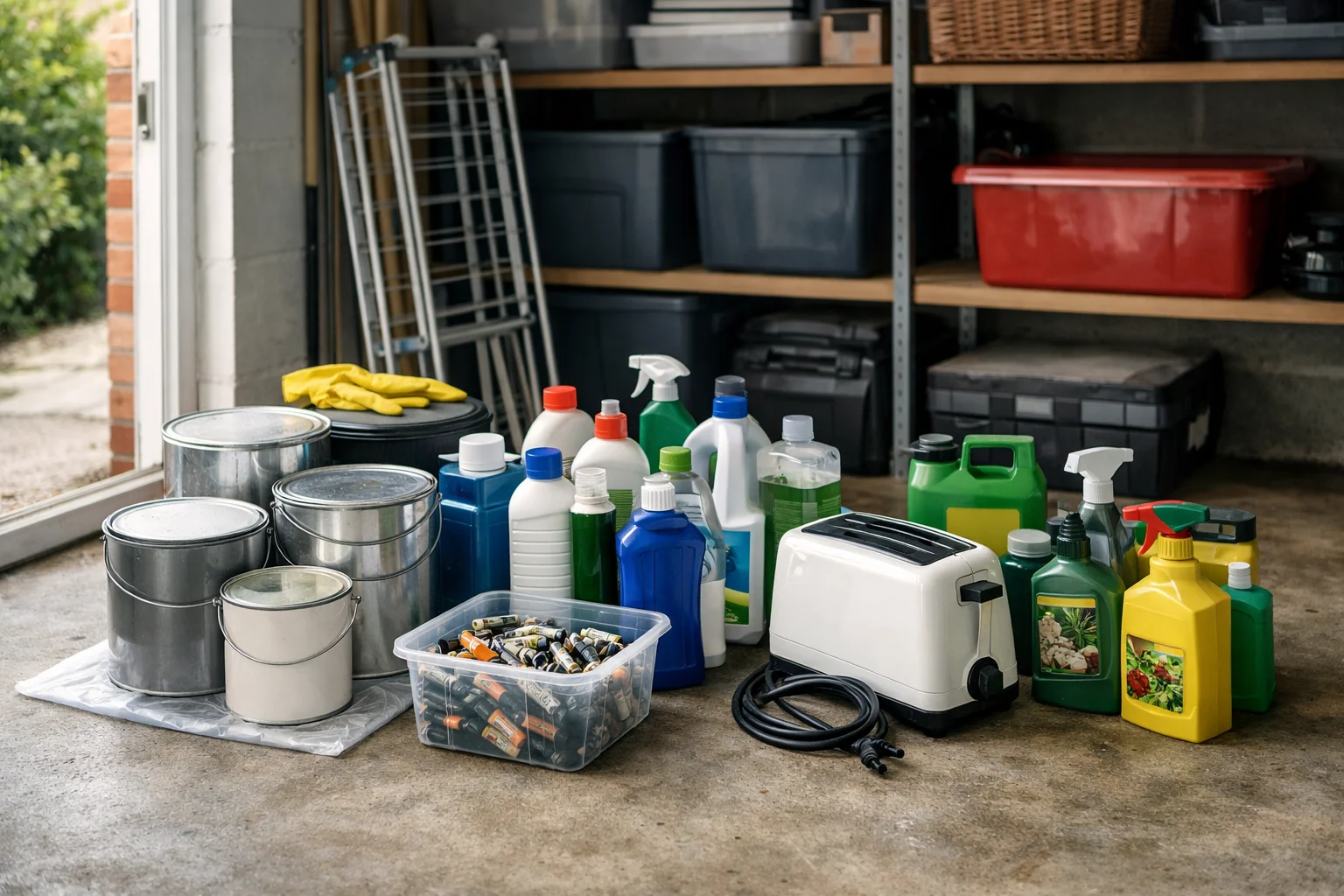
The most common examples include batteries, paints, chemicals, oils, and electrical items. These materials often contain heavy metals, solvents, or toxic compounds that require specialist handling.
Hazardous Properties and Associated Risks
| Hazardous Property | Description | Potential Risks |
| Toxic | Poisonous substances | Long-term illness, organ damage |
| Corrosive | Eats away materials | Burns, structural damage |
| Flammable | Easily ignites | Fires, explosions |
| Reactive | Chemically unstable | Gas release, violent reactions |
| Environmentally harmful | Damages ecosystems | Water and soil contamination |
Classification and Identification
Hazardous waste in the UK must be classified using European Waste Catalogue codes. Each waste type has a specific code that indicates whether it is hazardous.
For businesses, this classification is a legal requirement and must be accurate. Incorrect classification can result in fines, even if the waste itself is disposed of correctly.
Labels, safety data sheets, and hazard symbols play an essential role in identification. From a professional standpoint, I always recommend treating any unknown substance as hazardous until confirmed otherwise.
Hazardous waste must also be correctly labelled and stored in suitable containers. This ensures safety during handling and prevents accidental exposure or leaks during storage and transport.
What Types of Hazardous Waste Are Common in the UK?
Hazardous waste in the UK comes from a wide range of activities. Understanding the different categories helps determine how waste should be handled and who is responsible for its disposal. Each category has specific storage, transport, and disposal requirements.
Household Hazardous Waste
Households generate hazardous waste through routine activities such as cleaning, decorating, gardening, and maintaining vehicles. Because these items are familiar, they are often disposed of incorrectly.
Common household hazardous waste includes:
- Paint tins and varnishes
- Batteries of all types
- Cleaning chemicals and detergents
- Old electronics and electrical items
- Garden pesticides and weed killers
Local councils and recycling centres are usually the first disposal option for these items, although limits often apply.
Commercial and Industrial Waste
Businesses generate hazardous waste as part of their operations, especially in sectors such as manufacturing, automotive services, and cleaning. This waste is often produced in larger volumes and carries greater risk.
Typical commercial hazardous waste includes solvents, acids, oils, heavy metals, and chemical containers. Businesses are legally required to use licensed waste carriers and maintain disposal records.
Medical and Clinical Waste
Medical waste presents serious health risks if mishandled. It includes materials that may be infectious, toxic, or physically dangerous.
Examples include sharps, pharmaceuticals, contaminated dressings, and laboratory waste. This waste must be segregated and disposed of through approved clinical waste channels.
Construction and Demolition Waste
Construction sites often produce hazardous materials, particularly during refurbishment or demolition projects. Older buildings may contain asbestos or lead-based materials that require specialist removal.
Common construction-related hazardous waste includes asbestos sheets, lead paint, treated wood, and contaminated soil.
Common Hazardous Waste Categories in the UK
| Category | Examples | Typical Disposal Route |
| Household | Paint, batteries, cleaners | Council service or HWRC |
| Commercial | Solvents, oils, chemicals | Licensed waste carrier |
| Medical | Sharps, pharmaceuticals | Clinical waste contractor |
| Construction | Asbestos, lead paint | Specialist hazardous service |
How Can You Dispose of Hazardous Waste in the UK Safely?
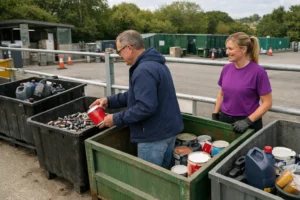
Safely disposing of hazardous waste in the UK requires more than simply finding somewhere to throw it away. It involves understanding what type of waste you are dealing with, choosing the correct disposal route, following legal requirements, and ensuring the waste does not pose a risk during storage or transport.
Over the years, I’ve noticed that most disposal issues arise not from neglect, but from confusion. People want to do the right thing, but they are unsure where to start.
In the UK, hazardous waste disposal follows a structured system designed to protect people, property, and the environment. Whether the waste comes from a household, business, or construction site, the same principles apply: identify, store, segregate, and dispose through approved channels.
Identifying Hazardous Waste Before Disposal
Before any disposal decision is made, the waste must be correctly identified. This step is often overlooked, yet it determines everything that follows.
Hazardous waste usually carries warning labels indicating toxicity, flammability, corrosiveness, or environmental harm. In commercial settings, safety data sheets and COSHH assessments also play a role.
From my experience, misidentification is one of the biggest reasons hazardous waste ends up being disposed of incorrectly. Items such as aerosols, oils, solvents, and electronic equipment are commonly mistaken for general waste, especially in domestic settings.
Once identified, hazardous waste should never be mixed with non-hazardous waste. Mixing increases risk and often makes disposal more expensive because the entire batch may then need specialist treatment.
Safe Storage Before Disposal
Hazardous waste often needs to be stored temporarily before collection or drop-off. Storage must be safe, secure, and compliant with regulations. Poor storage leads to leaks, exposure, and contamination, which can turn a manageable situation into a serious hazard.
Key storage principles include:
- Keeping waste in original or approved containers
- Clearly labelling containers with their contents
- Storing liquids upright and sealed
- Keeping incompatible substances separate
Storage areas should be dry, ventilated, and inaccessible to children, pets, or unauthorised personnel. In workplaces, designated hazardous waste storage zones are essential.
Disposal Through Local Council Services
For households, local councils are often the first point of contact. Most UK councils provide hazardous waste disposal options, although these vary by location. Commonly accepted items include paint, batteries, oils, and fluorescent tubes.
Some councils operate appointment-based collection services, while others require residents to take waste to a designated household waste recycling centre. It is important to check specific council guidelines, as turning up with unapproved items may result in refusal.
Council services are suitable for small quantities of domestic hazardous waste. However, they are not designed for bulk, commercial, or high-risk materials.
Using Household Waste Recycling Centres
Household Waste Recycling Centres play a crucial role in safe disposal. These facilities are equipped to handle a range of hazardous items and ensure they are transferred to appropriate treatment facilities.
Typical items accepted include:
- Paints and varnishes
- Automotive fluids
- Household chemicals
- Small electrical items
- Batteries and light bulbs
HWRC staff are trained to handle hazardous materials, but they rely on the public to follow instructions. Waste should be transported safely, kept sealed, and declared on arrival.
Common Hazardous Waste Accepted at HWRCs
| Waste Type | Accepted at HWRC | Special Conditions |
| Paint and varnish | Yes | Must be sealed and labelled |
| Engine oil | Yes | Limited quantities only |
| Batteries | Yes | Separate from other waste |
| Fluorescent tubes | Yes | Handle carefully to avoid breakage |
| Solvents | Sometimes | Check site rules in advance |
Licensed Hazardous Waste Carriers
When council services or HWRCs are not suitable, licensed hazardous waste carriers are the safest and most reliable option. This applies to businesses and households dealing with large volumes or high-risk materials such as chemicals, asbestos, or contaminated waste.
Licensed carriers are registered with the Environment Agency and are legally authorised to:
- Collect hazardous waste
- Transport it safely
- Provide consignment notes
- Deliver waste to approved treatment facilities
In my professional experience, using a licensed carrier removes uncertainty. Everything from packaging to paperwork is handled correctly, and there is a clear audit trail showing where the waste ends up.
This is where services like Rubbish Experts become essential. We ensure hazardous waste is collected, documented, and disposed of in full compliance with UK regulations, whether it comes from a single household or a large commercial site.
Legal Documentation and Consignment Notes
Any movement of hazardous waste must be accompanied by a hazardous waste consignment note. This document records:
- The type of waste
- Its quantity
- Where it originated
- Who transported it
- Where it was disposed of
For businesses, keeping these records is not optional. They must be retained for at least three years and made available for inspection if requested by authorities.
Failure to produce documentation can result in fines even if the waste itself was disposed of correctly.
Responsibilities During Hazardous Waste Disposal
| Party Involved | Key Responsibilities |
| Waste Producer | Correct identification, safe storage, accurate description |
| Waste Carrier | Licensed transport, safe handling, documentation |
| Disposal Facility | Approved treatment, compliance with environmental standards |
| Business Owner | Record keeping and duty of care compliance |
Disposal of High-Risk Hazardous Waste
Some hazardous waste types require specialist handling due to their potential danger. Asbestos, chemicals, and clinical waste fall into this category.
These materials should never be handled without professional support. Improper disposal can lead to severe health risks and long-term environmental damage.
Examples of high-risk waste requiring specialist disposal include:
- Asbestos insulation and sheets
- Laboratory chemicals
- Contaminated soil
- Clinical sharps and pharmaceuticals
Specialist waste services use sealed containers, trained operatives, and controlled disposal routes to minimise risk.
Transporting Hazardous Waste Safely
Transporting hazardous waste is often where things go wrong. Spills during transit are common when waste is poorly packaged or unsecured. Even transporting waste to a recycling centre requires care.
Safe transport practices include:
- Using leak-proof containers
- Securing items to prevent movement
- Avoiding overfilling containers
- Transporting waste directly without unnecessary stops
Businesses are prohibited from transporting hazardous waste themselves unless they are registered as waste carriers.
Transport Rules for Hazardous Waste
| Requirement | Domestic Waste | Commercial Waste |
| Registered waste carrier | Not required | Required |
| Secure containers | Required | Required |
| Consignment note | Not always | Mandatory |
| Vehicle signage | Not required | Required for certain waste types |
What You Should Never Do When Disposing of Hazardous Waste?
Over the years, I’ve seen many avoidable mistakes. These actions not only break the law but also put people at risk.
Hazardous waste should never be:
- Poured into drains or toilets
- Burned or buried
- Placed in general household bins
- Mixed with other waste types
- Left unsecured or exposed
Even small amounts of hazardous waste can cause significant damage when handled improperly.
Why Is It Important to Dispose of Hazardous Waste Properly?
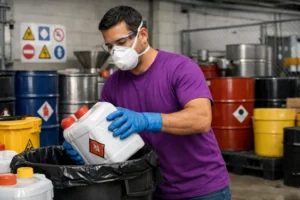
Protecting the Environment from Long-Term Damage
Disposing of hazardous waste properly is essential not just for legal compliance, but for protecting the environment we all depend on. Over the years, I’ve seen how easily soil and water can become contaminated when waste like oils, paints, or chemicals are disposed of incorrectly.
These substances don’t simply disappear. They seep into the ground, travel through waterways, and cause damage that can last for decades.
One waste disposal professional I spoke with once said,
“We often deal with clean-up jobs where a small amount of chemical waste has caused widespread contamination.
Most of the time, it started with someone thinking it wouldn’t matter.” That lack of awareness leads to problems that are far bigger than people expect.
Reducing Risks to Public Health and Safety
Hazardous waste poses serious risks to human health when it is not handled correctly. Waste collection teams, recycling staff, and even members of the public can be exposed to toxic substances through leaks, spills, or improper storage.
I’ve seen situations where batteries, solvents, and aerosols placed in general waste caused injuries during handling or transport.
Exposure to hazardous materials can result in burns, respiratory issues, skin irritation, and long-term health conditions. This is especially concerning in residential areas, where children and pets may come into contact with waste that hasn’t been secured properly.
Meeting Legal Responsibilities and Avoiding Penalties
UK hazardous waste regulations are strict for a reason. Individuals and businesses have a duty of care to ensure hazardous waste is identified, stored, and disposed of correctly.
From my professional experience, most fines and enforcement actions happen because people didn’t realise they were responsible for what happened to their waste after it left their property.
A licensed waste carrier and proper documentation are not optional for businesses. Failing to comply can lead to fines, legal action, and reputational damage.
Supporting Sustainable and Responsible Waste Management
Proper hazardous waste disposal also supports sustainability. Many hazardous materials contain valuable components that can be safely treated or recycled. When waste is handled responsibly, it reduces landfill use and supports a more sustainable waste management system.
From my perspective, disposing of hazardous waste properly isn’t just about following rules. It’s about protecting people, the environment, and future generations.
How Can You Manage Domestic Hazardous Waste at Home?
Hazardous waste isn’t just something that comes out of factories or construction sites. Many UK households unknowingly generate a variety of hazardous waste through everyday activities like cleaning, decorating, gardening, and DIY projects.
I’ve visited countless homes where forgotten chemicals, paint tins, or dead batteries sit for years under the sink or in the shed, all because people weren’t sure what to do with them.
Understanding how to identify, store, and dispose of hazardous waste at home can protect your health, prevent environmental damage, and keep you on the right side of the law.
Identify Hazardous Materials by Reading Labels
The first step is recognising what you’re dealing with. Most hazardous household products are labelled with clear warning signs like “flammable,” “toxic,” “corrosive,” or “harmful to the environment.” These include everyday items like:
- Cleaning products
- Paints and varnishes
- Weed killers and pesticides
- Batteries
- Motor oil and fuel
- Bleach and other strong disinfectants
If a product has a warning label, it should never be poured down the drain or placed in general rubbish. I always recommend taking a quick moment to check the label before deciding how to dispose of it.
Store Household Hazardous Waste Safely
If you need to store hazardous items temporarily, always keep them in their original containers with the labels intact.
Don’t transfer them into other bottles or jars, as this increases the risk of accidental misuse or chemical reactions. Store them in a cool, dry, and well-ventilated area preferably somewhere children and pets can’t reach.
One family I worked with had stored old garden chemicals next to food items in an outdoor cupboard, not realising how dangerous that could be. A small spill could have been disastrous. Separation and labelling really do matter.
Use Local Council and HWRC Services
Most local authorities offer disposal options for common household hazardous waste. This might include special drop-off points, mobile collection services, or access to your nearest Household Waste Recycling Centre (HWRC).
Always check your local council’s website for the list of accepted items and any booking requirements. Some centres accept:
- Batteries
- Fluorescent tubes
- Paint
- Motor oil
- Electricals (WEEE items)
If you’re unsure whether something is accepted, it’s better to call ahead than risk a wasted trip—or worse, improper disposal.
Never Mix Chemicals or Pour Them Away
One of the most dangerous mistakes I see is people mixing leftover household chemicals or pouring them down the sink.
This might seem harmless, but combining substances like bleach and ammonia can release toxic gases. Similarly, pouring motor oil or pesticides into drains contaminates water systems and harms wildlife.
Keep each item separate, securely sealed, and away from heat or flame until it can be collected or dropped off properly.
Common Domestic Hazardous Waste and How to Handle It:
| Item | Hazard Type | Disposal Advice |
| Paint (oil-based) | Flammable, toxic | Take to HWRC or book council collection |
| Household batteries | Corrosive, toxic | Drop-off bins at supermarkets or HWRC |
| Garden pesticides | Toxic, environmentally harmful | Dispose via hazardous waste events or HWRC |
| Aerosols | Flammable | Empty first, then recycle or take to HWRC |
| Motor oil | Flammable, harmful | Store in sealed container, take to HWRC |
| Cleaning agents | Corrosive, reactive | Do not pour away, check local guidance |
Seek Professional Help When You’re Unsure
Some household hazardous waste can’t be safely transported or identified without professional assistance. If you’re clearing out a garage, moving house, or dealing with waste you’re unsure about, the safest option is to contact a certified waste management provider.
At Rubbish Experts, we help homeowners across the UK with safe collection and compliant disposal of household hazardous waste. From small quantities to more complex situations, we ensure the process is straightforward and fully compliant with environmental regulations.
Need Help with Hazardous Waste?: We’re Here to Help

Not sure what to do with that old tin of paint, those leaking batteries, or the half-used garden chemicals in the shed? Wondering if you’ve been storing hazardous waste the wrong way? You’re not alone and you’re in the right place.
At Rubbish Experts, we understand that managing hazardous waste at home or in your business can be confusing. That’s why we’re here to make it simple.
Whether it’s one item or a full garage clearance, our fully licensed team handles hazardous waste with the care, compliance, and attention to detail it requires.
We’re not just a collection service we’re your local waste disposal partner, here to keep you safe, compliant, and stress-free. From offering advice over the phone to providing full on-site clearances, our goal is to make the entire process easy and environmentally responsible.
But don’t just take it from us. Here’s what some of our clients have said about our service:
“Fantastic service from start to finish. I had no idea how to dispose of old solvents and batteries safely, but the team explained everything clearly and took care of it quickly.”
“Rubbish Experts helped me clear out hazardous materials from a renovation project. They were punctual, professional, and took all the stress out of the job.”
“Highly recommend! We used them for a garage clearance, and they managed everything safely and legally. Great communication throughout.”
If you’re unsure what to do next or worried about handling hazardous waste yourself, give us a call or drop us a message. We’re always happy to help whether you need advice, collection, or both.
Conclusion
Disposing of hazardous waste responsibly isn’t just about following the rules it’s about protecting our homes, communities, and the environment from unnecessary harm.
From everyday items like batteries and paint to more serious materials such as solvents and asbestos, knowing how to handle hazardous waste safely is essential for every household and business.
At Rubbish Experts, we offer a trusted, fully licensed hazardous waste collection and disposal service to help you stay safe, compliant, and environmentally responsible.
Whether you’re clearing out your garage, tackling a renovation project, or just unsure what to do with a few items, we’re here to make hazardous waste disposal simple and secure. Let’s handle it the right way together.
Frequently Asked Questions About Hazardous Waste Disposal
What is considered hazardous waste in the UK?
Hazardous waste includes any substance that is flammable, toxic, corrosive, or reactive. Examples include batteries, solvents, asbestos, and some electronics.
Can I throw batteries and paint in regular bins?
No. Batteries and paint contain harmful chemicals and must be taken to a recycling centre or collected through a proper hazardous waste program.
Who is responsible for hazardous waste at work?
The employer or business owner is responsible for ensuring safe handling, storage, and disposal of all hazardous waste produced at the workplace.
Where can I take old chemicals or oils?
These should be taken to a household waste recycling centre or disposed of via a licensed waste carrier.
Are there penalties for illegal disposal of hazardous waste?
Yes. Fly-tipping or improper disposal of hazardous waste can result in fines, legal action, and even imprisonment in serious cases.
Do local councils offer hazardous waste collection?
Some councils offer collection services for small quantities of household hazardous waste. Check with your local authority for booking options.
How do I store hazardous waste before disposal?
Use sealed, clearly labelled containers. Store away from children, pets, and heat sources until the waste can be properly disposed of.